Monday, May 19, 2014

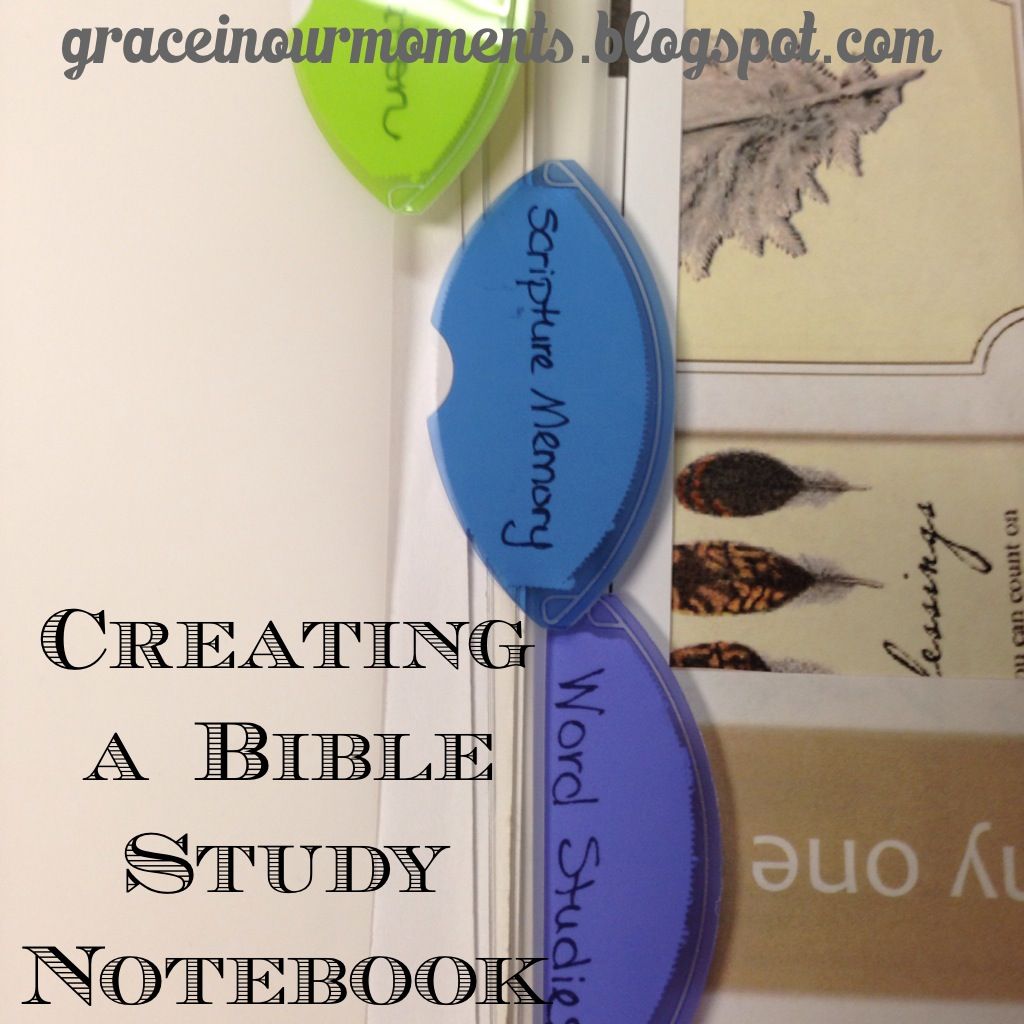
Creating a Bible Study Notebook


You're getting involved in Bible study. You're discovering your style and finding the best way to study. Now the only thing left to do is organize your study materials and notes so you can find the information later. You're ready to create a Bible study notebook.

A simple three ring binder and some divider tabs are all you really need to get started. You'll want to get at least a 1 inch binder - anything less and you'll run out of room too quickly.

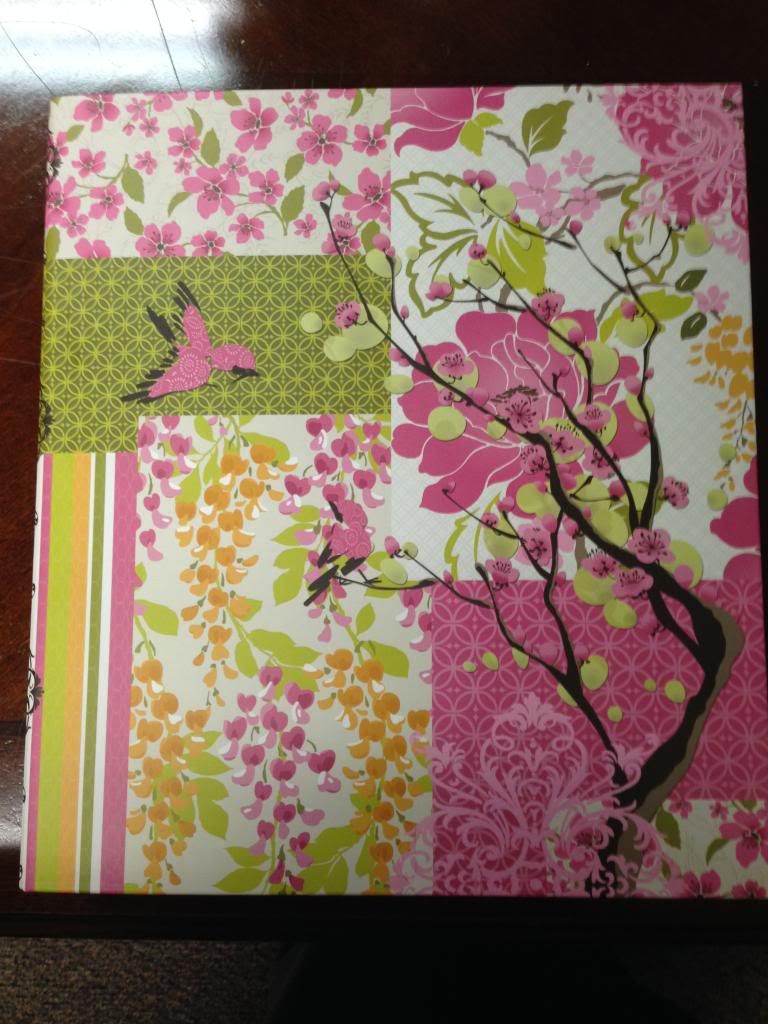
I'm a notebook addict. I love pretty binders with beautiful colors and patterns. The new Pink Chandelier line from Walmart is my new favorite, so I picked up a brand new 1 1/2 binder this week:


I've divided mine into five sections:

1. Inspiration

Inspiration is everywhere, so whenever I find a great article or blog post that encourages me in my quiet time, I print it out for my notebook. At the beginning of mine is Ann Voskamp's "Sanity Manifesto" - the post that came when I so desperately needed a reminder to focus on what really matters. Behind it sits the email devotional that first led me to faith journaling several years ago. Find your inspiration and put it in your notebook to remind you of your "why."

2. Scripture Memory

I started this section with a little inspiration, too - tips on how to memorize and review. While I use Scripture Typer for most of my memory work, I've decided to also hand-copy every passage I memorize and keep it in this section. It's easier to review a large chunk of verses this way.

3. Word Studies

Doing organized, in depth word studies is something new that I'm adding to my study time. Each word will have its own page that I can add to it no matter what book or topic I'm studying at the time.

4. Inductive Study

Since this is my favorite study method, I have a section just for notes on inductive study. I also keep a chart of the symbols and colors I use so I can quickly find what each one means.

5. Book Studies

This is for my current Bible study. Right now, I'm obsessed with the book of Ephesians. Once I'm done studying it, I will move my notes to their own separate notebook.
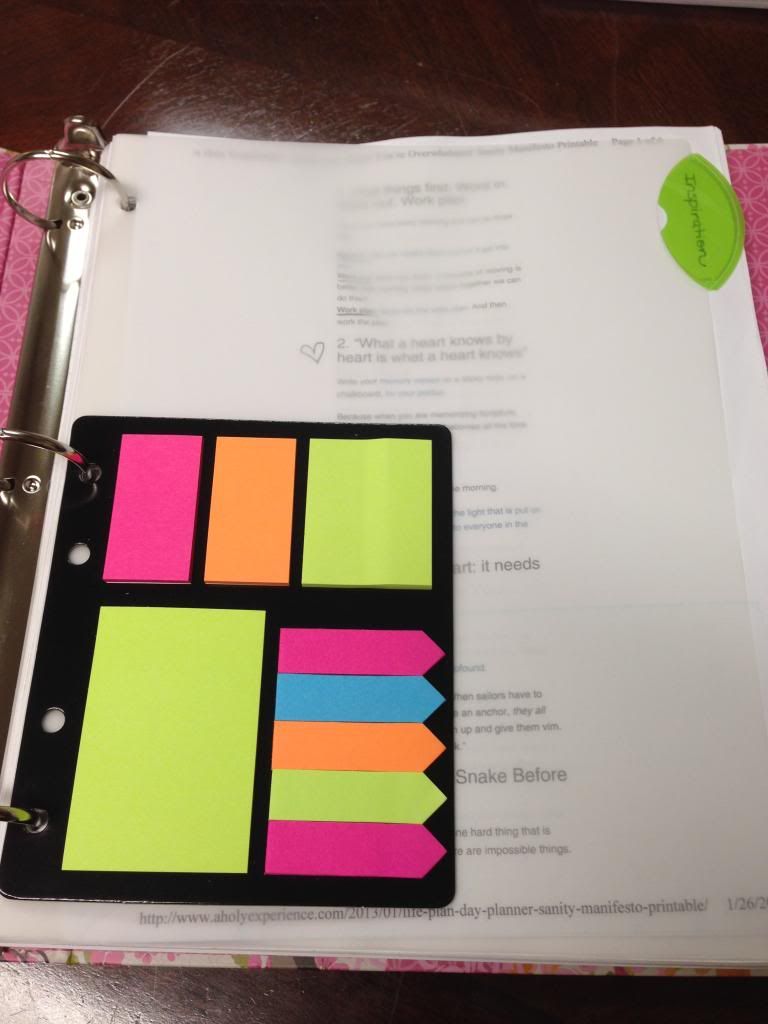


And that's all you need. You can add more or less tabs to personalize your notebook, but in a few minutes you can have an easy to use, organized system for keeping all your Bible study notes.

Saturday, May 17, 2014

Spiritual Misfit, Week 2: My Excel Spreadsheet Life

This post was supposed to go up last week, but I found myself in the middle of a last-minute decision to have a yard sale...which is why this post went up a week late. Sorry, everyone. I will stay on track this time!

God has a sense of humor. I think it comes out a lot when we fall in love. When I met my husband, I was a nineteen year old vegetarian studying English literature and spending most of my spare time reading books or riding horses and working in the barn. He was an avid deer hunter who only read fiction when forced to - and he was already a pastor. A painfully shy girl like me wasn't exactly pastor's wife material. But God had other plans.

I thought I had it all worked out. I would finish both my bachelor's degree and my master's before settling down. I would date the love of my life for at least a year before getting engaged. We would get married, have several kids and settle down on a large farm, where I would become a writer.

I'm pretty sure God heard those plans and laughed. A lot.

I met my husband when I was nineteen and he was twenty-four. We were friends - okay, actually, he was my pastor and we became friends during that time - for a year. Then he moved to another church an hour away, and my world crumbled. Suddenly I realized that my feelings were not longer just about friendship. He obviously felt the same way, because three weeks after he moved, he called and asked me for our first date. Less than a month after our first date, I had an engagement ring on my finger, and three months later, I became a pastor's wife.

It was a rude awakening. Some moments were funny...like the time I said "I'll pass" when asked to pray. (I'll share that story when I guest post on Michelle's blog later this summer.) Some were painful...let's just say that pastor's wives aren't always treated by the Golden Rule. Suddenly the girl who spent almost 20 years living in the same house, the girl who treasured stability and routine, moved three times in less than two years. We would go on to move four more times in the next five years - sometimes across town, sometimes across the state, and finally out of state.

As Michelle says, "I have liked a precisely ordered universe. I crave order and structure...and have an unflagging zest for control." Suddenly I knew that I wasn't in control of anything - and I think that was God's plan all along. He doesn't like to leave us in our comfort zones. Looking back, I can see that He had a perfect plan all along...I just wish I'd realized that sooner!

What has God done to take you out of your comfort zone?

Tuesday, April 29, 2014

Where Do I Start: Types of Bible Studies

After my last post, you're ready to start studying your Bible, right? You have a good study Bible, you have an idea of the type of study you want - now what? It's time to choose a Bible study.

There are many types of Bible studies available. Some are great for beginners, some can be overwhelming at first. Where do you start? Let's look at a few different types of studies you can do:

1. Big Picture Studies
These plans take you through major portions of the Bible, or the whole Bible. Examples are read the Bible in a year plans, the Bible in 90 days, or reading though the New Testament.

This year, I'm reading through the Bible. I've done it once before, about ten years ago. It's a good balance for me, and it only takes about fifteen or twenty minutes a day. 

Even here, there are multiple plans to choose from - you can read the Bible cover to cover, chronologically or mixing Old and New Testament readings. You can do a plan like this year after year and change it up each time.

YouVersion has great free plans available to help you read through the Bible. For my reading this year, I'm using A Woman's Guide to the Bible in a Year by Diane Stortz. I'm enjoying going through this plan with a Facebook group. The arrangement alternates readings - one book in the Old Testament, one book in the New Testament or a few Psalms. 

2. Detailed Studies
My favorite type of Bible study is inductive study. I love the depth of these studies - reading cross refernces, digging into the meaning of key words, marking maps, and really going deep into a text. I could spend weeks studying the same chapter. 


If this type of study appeals to you, Kay Arthur's Precept Ministries is the best place to start. She offers a free download that explains the basics of inductive study and many free study guides that are go along with her TV series--they also work well for individual study.

3. Word Studies
The Bible wasn't written in English. The original Hebrew and Greek are very different from our language, and sometimes English just can't do as well with its descriptions. Word studies are perfect for going deeper into the Bible without getting overwhelmed.

Two great examples are Kerri Wyatt Kent's Deeper Into the Word books. One covers Old Testament words, and the other covers New Testament words

4. Topical Studies
Topical studies cover specific topics from the Bible. The possibilities are endless--from prayer to parenting. Lysa Terkeurst and Stormie Omartain have great books and studies available to help you dig into specific topics.

5. Total Immersion Studies
This is my absolute favorite way to study the Bible. I don't know if it's technically listed as a method, but I love to focus completely on one book - studying it, writing it by hand in my journal, memorizing verses from it. I love to wrap my mind and heart completely around one book, digging into the individual words, using inductive study, and seeing how it fits into the bigger picture. 


Although I haven't gone through one of her studies, some of Beth Moore's studies take this approach.

What method appeals to you the most? This week, look at a local Christian bookstore, online, or on the Apple or Android app store. Find a study or reading plan that is doable, gather a few supplies (notebook, colored pencils, or whatever you'll need for your specific study) and dive in.  

Monday, April 28, 2014

Finding Purpose in the Pain

Grace. It’s what I beg for, on my knees before God, tears streaming down my face. I fall into His arms once again, desperate for healing. He is the only One who truly understands my pain, so I cling tight as I plead for more grace. Grace to understand, grace to forgive, grace to accept that this whole thing may never make sense.

You can read the rest of my post at http://millionprayingwomen.com/relationships-bring-pain/

Sunday, April 27, 2014

Spiritual Misfit, Week One: The Beginning of the End

I'm so excited that you're joining me as we go through Michelle DeRusha's new book, Spiritual Misfit. Although I'm an avid reader, this is my first time to host a study on my blog. I'm so excited! Let's dive into chapter one...


We all have a past. Whether we were raised in church or never darkened the door of one until adulthood, we've all done things we regret. For Michelle, it started with a necklace. I don't remember the specific event or the exact time when the fear and regret entered my heart, but I understand Michelle's heart, because I share it.

For most of my life, my heart and soul ached with the knowledge that I would never be enough. I was thin - but I could always be thinner. My grades were good - but they could be higher. I was in every way the classic "good girl" - but deep down, I knew I could never be good enough. The good girl facade could fool a lot of people, but God knew the sins and struggles of my heart. Even as a child, I knew my soul was dark with sin.

Every time I messed up, every time I failed to live up to the idol of "good enough," I begged for forgiveness. I cried. I prayed. As Michelle says, "Had there been a flagellation whip at hand, I would have used it in an instant, anything to gain a feeling of atonement." I lived so much of my childhood in fear that God would give me what I deserved.

I grew up in church. I asked Jesus in my heart at the ripe old age of five. I loved Him, and I did my best to follow Him. Surrounded by strong examples of faith, I should have been encouraged. Instead, I looked past the lessons and set more impossible standards for myself.

I clearly remember a late night in college, sitting in a truck stop/restaurant with a group of friends. A lady came in for coffee and sat alone, crying. One of friends immediately went to her table. She talked to her, hugged her, prayed with her. I watched, frozen, too shy and fearful to do anything but stare. I cried as I drove back to my dorm. There was no way I could ever do what my sweet friend did that night. Fear and shyness kept me from reaching out - and I convinced myself, once again, that God would never be truly happy with me. I tried to follow all the rules and check off everything on my "good girl" list, but I fell short every time.

College changed everything for me. Well, not college itself, but it was the catalyst. As I dove into Bible studies and college ministries, God worked on my heart. I'll share more as our weekly discussions moved along, but for now, let's just say that God didn't leave me the same.

Tell me what you think about chapter one and how it relates to your life...
1. Do you remember a moment when you really messed up?
2. What has your biggest spiritual struggle been?
3. Did you grow up with a clear picture of faith, or was faith something you saw little of?

Tuesday, April 15, 2014

Spiritual Misfit - A Review and Giveaway

Misfit. Awkward. Not enough.

Do those words strike a chord with you? They hit me hard, because I know those feelings. That's why Spiritual Misfit hit home for me.


Michelle and I come from very different backgrounds, but her story resonates in my heart. I've been the spiritual misfit - the one who felt like her faith wasn't enough, the one who looked around and felt completely out of place among seeming super-Christians, the one who feared that people would see behind the facade to the real me. I struggled for years before I started to truly grasp God's grace and overwhelming love.

Michelle writes with so much honesty about her struggles with faith. She had me emotional on one page, and on the next she had me laughing until tears streamed down my face. Seriously, you will never look at Cheese-Its the same way again - and if you've ever nursed your children, you'll have to put the book down during chapter three. I promise, it's going to take a while to quit laughing.

Spiritual Misfit is beautifully written. Michelle holds nothing back, sharing her highs and lows on her journey, her doubts and fears, and how God led her to Himself. 

Thanks to the wonderful people at Convergant Books, I am giving away one copy of Spiritual Misfit. Entering is easy - check out the Rafflecopter giveaway below. You must be a resident of the continental U.S. to enter. 


One last note: Starting May 1, I'll host a weekly book discussion on my blog, covering one chapter of Spiritual Misfit at a time. I'd love to have you join in!

Monday, April 14, 2014

Where Do I Start: Choosing the Right Bible Study

You can't start a job without the right tools. The same is true for studying the Bible. If you look around any Christian bookstore, though, you'll see there are about as many Bible study options as there are people. Some require a major time commitment, others take only a few minutes a day. There are topical studies, book studies, word studies, and more. Where do you begin?

1. Choose the right translation.
Walking into the "Bible" section of your bookstore can be overwhelming. There are enough acronyms to make your head spin. If you're going to make the most of your time studying the Bible, you need to choose the right one. Where do you start?

Let's start with translations. There are three main translations I love:
NIV - easy to understand, this is a very popular translation with lots of Bibles and other study materials to choose from. I teach children's church, and this is the translation I use when I teach.

NASB - For my own personal study, this is the version I use. It's widely regarded as one of the most accurate translations, plus it's easy to understand. Personally, I am a huge fan of the NASB Study Bible.

ESV - Also a very accurate and easy to understand translation.

One important note: Make sure you choose a translation (NASB, NIV, etc.) instead of a paraphrase (The Message). A translation is word for word from the original languages, while a paraphrase is a retelling in an individual's own words. Paraphrases can be a great tool - I love reading The Message - but they should be used as extra reading, not your main study Bible.

Now what about types of Bibles? Once you choose your translation, you can find anything from a devotional Bible to a study Bible to a wide-margin Bible just for taking notes. I love a good, basic study Bible, like the NASB Study Bible. It's filled with good information, including background information on each book, maps, cross references, and more - but it's all on a pretty easy to understand level. It's a great for your first study or your hundredth.

2. Think about your learning style.
Are you a visual learner? Do you like variety or do you need repetition to learn? Do you move quickly through new material, devouring it all at once, or you like to mull over new ideas over a few days or weeks? Look for a study that moves at your pace without overwhelming you.


Personally, I'm very visual. I love using colors, symbols, charts and graphs to help me digest information. When I discovered Kay Arthur's book "How to Study the Bible for Yourself" I knew I'd found my perfect match. I love her visual, detailed approach to Bible study. As a former English major, I love to study the little nuances of a text, and her color/symbol approach to marking my Bible helps me see the big picture quickly.

3. Start small.
If you are just starting your Bible study journey, start small. Instead of committing to reading the entire Bible or jumping onto a year-long study, find a study that you can finish a few weeks. There are some great long-term, intensive Bible study plans (I'll get into specifics next week) but for now, set goals that you can reach in the short term. This also lets you experiment with different study styles. You might find that your original approach doesn't work. You may need to try several styles before you find one that fits.

Next week, I'll walk you through a few specific styles of Bible study. And if you're ready to dive in to a short-term, doable study, consider signing up for Hello Mornings. Registration for the next study - a free six week study of the book of 1 John - starts today.

HelloMornings